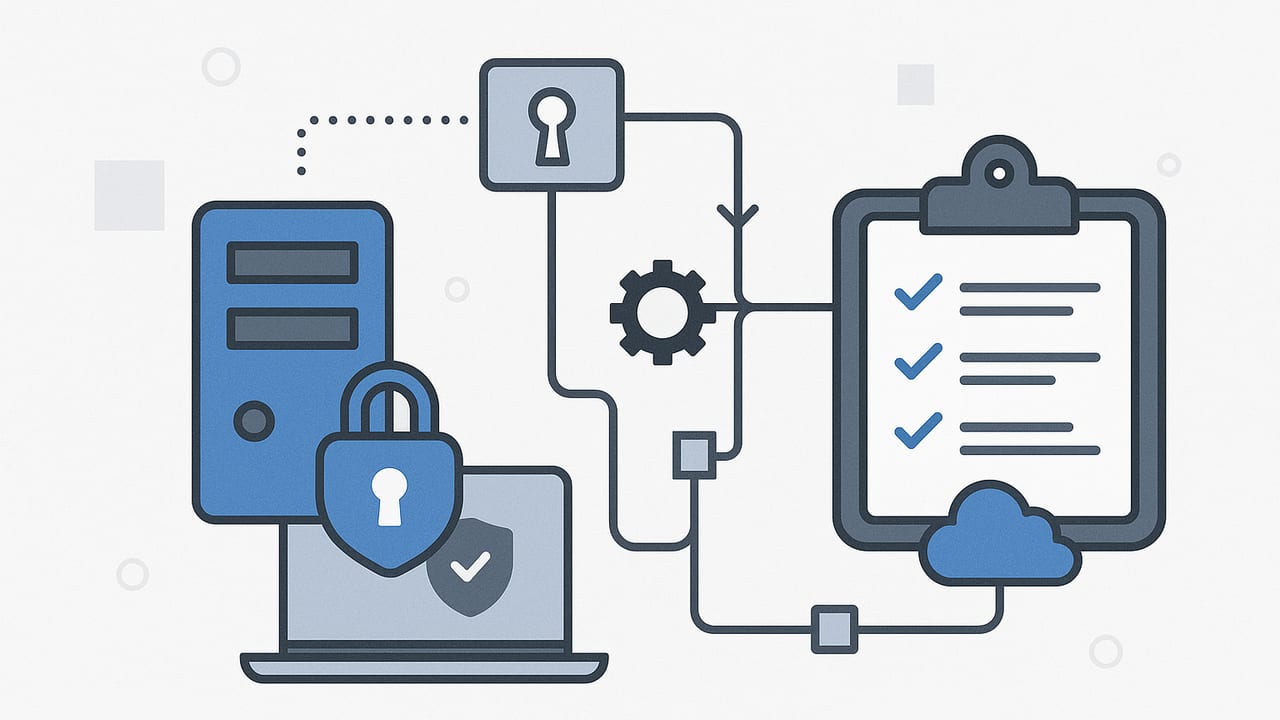
DevOps secrets management is the discipline of controlling and automating how sensitive values—API keys, database passwords, certificates, tokens—are created, distributed, used, rotated, and audited across build systems, cloud infrastructure, and runtime environments. Getting it right reduces breach impact, limits lateral movement, and simplifies compliance. This guide covers practical patterns, anti-patterns, code examples, and a step-by-step runbook you can adopt today.
Start with the Threat Model
Before selecting tools, define the risks you need to mitigate. In modern delivery pipelines, secrets traverse multiple hops and formats. Consider:
- Supply chain exposure: Build runners, third-party actions, base images, and package registries may exfiltrate secrets if misconfigured.
- Scope creep: Long-lived credentials with broad privileges become universal keys to your kingdom.
- Telemetry leaks: Secrets printed in logs, metrics, or traces persist in observability backends and tickets.
- Endpoint sprawl: Secrets copied into config files, container layers, or IaC state expand your attack surface.
- Human factors: Over-reliance on manual sharing, chat pastes, or copy/paste rote tasks invites error.
You can’t secure what you can’t rotate. Prioritize architectures that enable short-lived, easily replaceable credentials.
Core Principles for DevOps Secrets Management
- Least privilege: Narrow IAM scopes to the minimum actions needed, scoped to environments and workloads.
- Ephemerality: Prefer short-lived tokens and dynamic credentials over long-lived static secrets.
- Separation of duties: Keep build-time and run-time access distinct; avoid sharing credentials between teams or systems.
- Automated rotation: Rotate on schedule and on demand; verify rotation through tests and observability.
- Centralized control, distributed delivery: Central policy and audit with local injection at runtime.
- Auditability: Log read/write events with actor identity, source IP, workload identity, and reason codes.
- Secrets never at rest in plaintext: Protect with KMS-backed encryption; avoid committing secrets into Git or container layers.
Architecture Patterns That Work
1) Centralized Vault with KMS Backing
Use a centralized secrets manager or vault with keys managed by a cloud KMS or HSM. This consolidates storage, policy, and audit. Access is granted via workload identity (OIDC, SPIFFE/SPIRE) rather than static tokens.
- Pros: Strong governance, audit trails, policy consistency.
- Cons: Requires reliable HA design and clear bootstrap (“secret zero”) strategy.
2) Dynamic Credentials and Short-Lived Tokens
Issue credentials on demand with short TTLs—database users per app instance, cloud credentials minted per pipeline job, or mTLS certs per pod. Compromise window shrinks and rotation becomes continuous.
- Pros: Least privilege by default; natural containment.
- Cons: Needs integrations with databases, clouds, PKI, and careful caching.
3) Inject at Runtime, Not at Build
Do not bake secrets into images or IaC state. Instead, inject via a sidecar, CSI driver, or init container at startup. Immutable images stay reusable across environments while secrets remain environment-specific.
4) Workload Identity Federation (OIDC/SPIFFE)
Replace shared secrets with identity documents issued by your platform (GitHub OIDC, GitLab OIDC, Kubernetes ServiceAccount tokens, SPIFFE SVIDs). Map those identities to roles in your secrets manager or cloud IAM without handing out static keys.
Anti-Patterns to Avoid
- Secrets in Git: Even encrypted blobs linger in history and forks; rely on a vault and references instead.
- Baking into images: Compromises immutability and causes mass rotation events when images leak.
- Environment variable sprawl: Easy to leak in crash dumps and diagnostic commands; prefer in-memory files or tmpfs mounts with least read access.
- Chat and ticket pastes: Ingest to SIEMs and backups; scrub and block patterns at the edge.
- One secret for many apps: Violates least privilege and complicates rotation blast radius.
CI/CD Integration: Practical Examples
The pipeline is where DevOps secrets management succeeds or fails. Use identity federation and fetch secrets just-in-time.
Example: GitHub Actions to Cloud Secrets via OIDC
# .github/workflows/deploy.yml
name: deploy
on: [push]
jobs:
  deploy:
    permissions:
      id-token: write      # enable OIDC
      contents: read
    runs-on: ubuntu-latest
    steps:
      - uses: actions/checkout@v4

      # Configure AWS creds using OIDC (no long-lived keys)
      - uses: aws-actions/configure-aws-credentials@v4
        with:
          role-to-assume: arn:aws:iam::123456789012:role/gh-oidc-deployer
          aws-region: us-east-1

      - name: Fetch secret just-in-time
        run: |
          SECRET_JSON=$(aws secretsmanager get-secret-value \
            --secret-id prod/app/api \
            --query SecretString --output text)
          echo "$SECRET_JSON" > /tmp/secret.json
          # Run deploy using ephemeral secret file, not env var
          ./scripts/deploy --config /tmp/secret.json
          shred -u /tmp/secret.json
Key points: OIDC federation avoids static keys; secrets are written to a temporary file and shredded after use; minimal IAM permissions are scoped to the repository and branch conditions.
Example: Kubernetes Secret Store CSI Driver
# Pod mounting secrets through a CSI provider at runtime
apiVersion: v1
kind: Pod
metadata:
  name: api
spec:
  serviceAccountName: api-sa
  containers:
  - name: app
    image: ghcr.io/org/app:main
    volumeMounts:
    - name: secrets
      mountPath: /run/secrets
      readOnly: true
  volumes:
  - name: secrets
    csi:
      driver: secrets-store.csi.k8s.io
      readOnly: true
      volumeAttributes:
        secretProviderClass: api-secrets
With a SecretProviderClass, the driver fetches secrets from your provider (cloud or vault) using the pod’s identity, eliminating static Kubernetes Secrets and base64 sprawl.
Comparing Common Secrets Tooling
| Option | Rotation Automation | Dynamic Credentials | Identity Federation | Versioning | Typical Use |
|---|---|---|---|---|---|
| AWS Secrets Manager | Yes (integrations/Lambda) | Limited (via services like RDS rotation) | Yes (IAM, OIDC via federation) | Yes | AWS-centric apps and pipelines |
| Azure Key Vault | Yes (Key Vault + Functions) | Limited (mostly through integrations) | Yes (Entra ID, workload identity) | Yes | Azure-native workloads |
| GCP Secret Manager | Yes (scheduler/functions) | Limited (via connectors) | Yes (Workload Identity Federation) | Yes | GCP-native workloads |
| Self-Hosted Vault | Yes (built-in engines) | Strong (DB, cloud, PKI) | Yes (OIDC/JWT, SPIFFE) | Yes | Multi-cloud, hybrid, regulated |
Choose based on your identity model, ecosystem, and whether you need native dynamic credentials across clouds, databases, and PKI.
Compliance and Audit Without the Friction
- Evidence of control: Centralize audit logs linking workload identity to secret access. Include request origin and justification metadata.
- Rotation policy: Enforce rotation SLAs per secret class (e.g., DB creds 24h TTL, API keys 7 days). Gate releases on expired secrets.
- Segmentation: Separate prod vs. non-prod paths and enforce break-glass workflows with alerts.
- Data protection: Use KMS-backed encryption, HSM for master keys if required, and envelope encryption for transit points.
- Mapping: These practices align with SOC 2 CC6/CC7, ISO 27001 A.8/A.9, and HIPAA technical safeguards.
Incident Response and Rotation Runbook
- Detect: SIEM alert triggers on anomalous secret usage or leakage indicators (e.g., regex match in logs).
- Contain: Revoke or disable the affected credential scope immediately; block egress if needed.
- Rotate: Trigger automated rotation for the secret and all dependent replicas; invalidate caches.
- Validate: Run health checks and canaries against dependent services to ensure continuity.
- Hunt: Review access logs for blast radius; rotate adjacent secrets if lateral movement is possible.
- Post-incident: Add detections and harden policies; update runbook tests so the next rotation is faster and safer.
KPIs and SLOs That Prove Control
- Mean time to rotate (MTTRo): Median time from detection to confirmed rotation.
- Secret TTL distribution: Percentage of secrets with TTL ≤ 24h (aim to increase over time).
- Least privilege score: Ratio of permissions used vs. granted for service roles.
- Policy coverage: Share of workloads retrieving secrets via workload identity (vs. static keys).
- Leakage incidents: Count and mean time to detect leaked secrets in SCM, logs, or tickets.
Implementation Roadmap
Phase 1: Foundation
- Inventory secrets across pipelines, IaC, and runtime; tag owners and environments.
- Stand up a central secrets store (cloud-native or vault) with KMS-backed encryption.
- Enable OIDC or workload identity from your CI system; remove static CI keys.
- Create naming conventions and paths (e.g.,
env/app/component), and set default TTLs.
Phase 2: Pipeline and Runtime
- Refactor CI jobs to fetch secrets just-in-time using identity federation.
- Adopt Kubernetes CSI or sidecars to inject secrets at runtime; remove Kubernetes Secrets where possible.
- Turn on rotation for high-value secrets; verify with automated tests post-rotation.
- Centralize audit streams to your SIEM; create dashboards and alerts for anomalous access.
Phase 3: Dynamic and Zero Trust
- Introduce dynamic credentials for databases, PKI, and cloud roles with short TTLs.
- Implement per-service least privilege roles and deny-by-default policies.
- Codify incident runbooks as pipelines: one-click revoke and rotate.
- Expand to multi-cloud/hybrid with common policy-as-code (e.g., OPA) for consistent enforcement.
Common Questions
Where should secrets live in containers?
Mount secrets at runtime into /run or /tmp as files with restrictive permissions. Avoid environment variables for high-value secrets because they leak easily in diagnostics and crash reports.
How often should we rotate?
Base on risk and blast radius. Aim for hours or days, not months. If rotation breaks apps, treat it as technical debt: shorten TTLs gradually and add idempotent rotation scripts.
Can we scan away leaks?
Secret scanning is essential, but it’s a detective control. The preventative control is eliminating long-lived secrets and ensuring they never enter Git or logs in the first place.
A Quick “Good, Better, Best” Reference
| Scenario | Good | Better | Best |
|---|---|---|---|
| CI to Cloud | Static keys in CI | Short-lived keys via rotation | OIDC federation + scoped role |
| App to DB | Long-lived password | Password rotated nightly | Dynamic DB user per instance |
| Kubernetes | K8s Secret objects | Encrypted secrets + RBAC | CSI driver + workload identity |
Takeaways
- Tie secrets to identities, not humans or machines directly. Use OIDC/SPIFFE everywhere you can.
- Prefer runtime injection and ephemeral credentials over static values.
- Automate rotation and make it safe with tests, canaries, and feature flags.
- Centralize policy and audit; decentralize delivery to the edge.
- Measure success with MTTRo and TTL distributions, not just “we have a vault.”
If your organization is consolidating fragmented stores and wants an approachable path to automation and compliance, platforms like Vaulify specialize in secure secrets management and can help operationalize these practices without turning every team into a PKI and IAM expert.