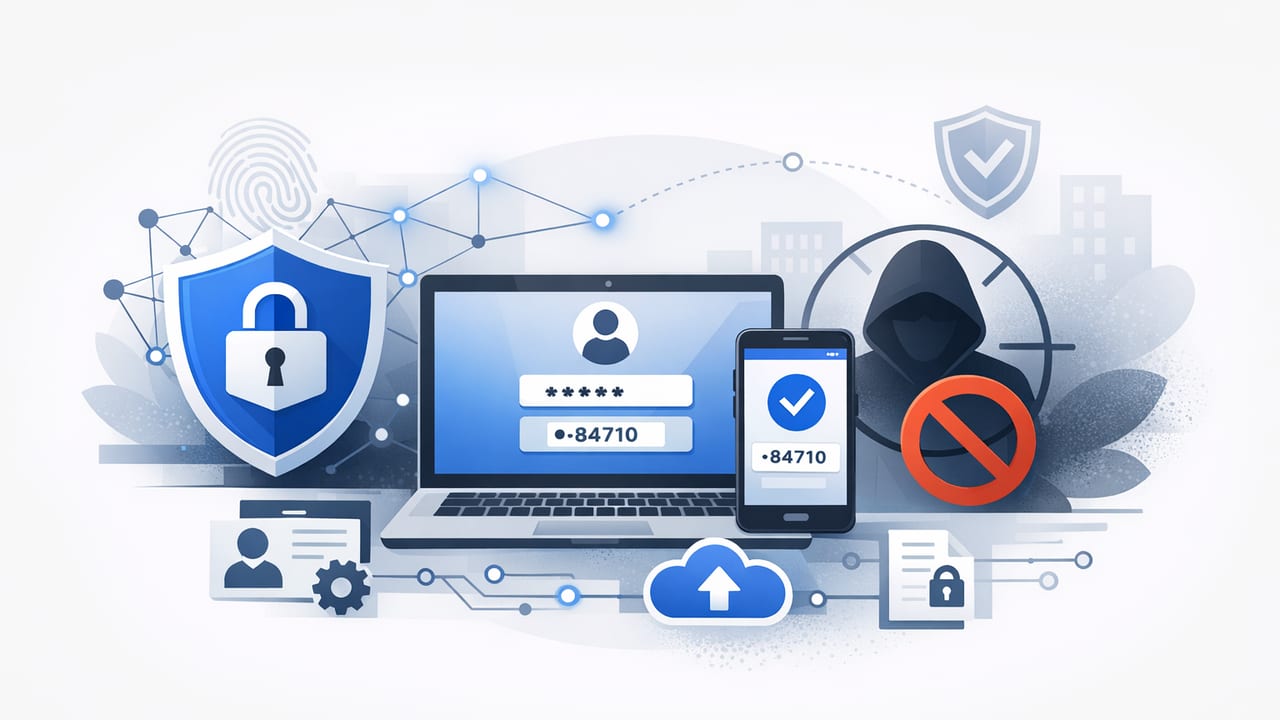
Credentials (passwords, API keys, SSH keys, database logins, signing tokens) are still one of the most common paths attackers use to gain access. The problem is rarely a single weak password—it’s the system: who can create credentials, where they are stored, how they are shared, how they are rotated, and how access is audited over time. That system is what “credentials governance” is meant to control.
A zero trust approach to credentials governance assumes no user, workload, network segment, or vendor integration is inherently trustworthy. Every request for a secret must be explicitly verified, limited to the smallest necessary scope, and continuously monitored. This article lays out a practical governance model you can apply across engineering, IT, security, and compliance without turning day-to-day work into red tape.
What credentials governance covers (and what it doesn’t)
Credentials governance is the set of policies, controls, and operational processes that define:
- Ownership: who is responsible for a credential and its lifecycle.
- Creation standards: how secrets are generated and what strength/format is allowed.
- Storage: where secrets can live (and where they can’t).
- Access: who/what can retrieve secrets, under what conditions.
- Rotation and revocation: cadence, triggers, and emergency invalidation.
- Audit and reporting: what’s logged, reviewed, and retained.
- Exceptions: how risk is documented and time-bounded.
It typically does not define application authorization (business permissions) or broader IAM strategy in full—but it should integrate closely with IAM, CI/CD, incident response, and vendor management.
Why “zero trust” changes the governance model
Traditional credential programs often rely on soft assumptions: internal networks are safer, service accounts are stable, long-lived tokens are acceptable if “kept private,” or break-glass accounts are rarely used. Zero trust replaces those assumptions with explicit controls and verification.
Zero trust is not “trust no one.” It is “trust is not implicit; it must be continuously earned through verification and least privilege.”
In practice, zero trust governance means:
- Identity-first decisions: access depends on strong identity signals (SSO, device posture, workload identity), not network location.
- Just-in-time and just-enough access: reduce standing privileges and long-lived secrets.
- Continuous validation: reevaluate access on every request with policy, context, and auditability.
- Assume breach: design controls so that a leak is contained and recoverable quickly.
Core principles for a zero trust approach to credentials governance
1) Treat every credential as a liability with a defined owner
Unowned credentials become permanent. Assign an accountable owner (team or role), a purpose, and an expiry expectation. This is easiest when every secret has required metadata such as:
- System (what it accesses)
- Environment (prod/stage/dev)
- Owner (team distribution list or on-call group)
- Rotation policy (cadence + triggers)
- Data classification (internal/confidential/restricted)
2) Prefer ephemeral credentials over static secrets
Static secrets are copied, cached, and reused. Where possible, use short-lived credentials minted from an identity provider, cloud IAM, or workload identity (e.g., OIDC-based federation) so secrets expire quickly and are harder to misuse.
3) Enforce least privilege at retrieval time, not just at creation
It’s not enough to create a “read-only” token once. Governance should enforce:
- Scope: the credential grants only necessary permissions.
- Audience: only the intended app/workload can retrieve it.
- Context: access depends on conditions (device posture, source workload identity, environment, time window, ticket approval).
4) Make secrets access observable and reviewable
Zero trust is measurable. You need logs that answer: who accessed what, when, from where, using which identity, and whether policy allowed it. Governance requires review rhythms (weekly/monthly) and automated detection of anomalies.
A reference architecture for credentials governance
A scalable approach usually includes:
- Central secrets store for encryption, access control, and audit logs.
- Identity provider (SSO) for human access; workload identity for services.
- Policy engine (rules-as-code) to enforce conditions consistently.
- Automation for rotation, provisioning, and deprovisioning.
- Telemetry shipped to SIEM for detection and compliance reporting.
Control mapping table: zero trust principle → governance control
| Zero Trust Principle | Governance Control | Practical Example |
|---|---|---|
| Verify explicitly | Strong auth + context-based policy | Require SSO + MFA and device posture to read production secrets |
| Least privilege | Scoped secrets + per-app access paths | Separate DB credentials per service; deny wildcard access |
| Assume breach | Short TTL + rapid rotation | Auto-rotate API tokens every 30 days or immediately on alert |
| Continuous monitoring | Audit logging + anomaly detection | Alert if a secret is accessed outside normal deployment windows |
| Minimize blast radius | Segmentation by environment and sensitivity | Prod secrets isolated; dev cannot read prod paths |
Policy design: define “who can access what” in a way that scales
Policies fail when they are either too permissive (“all engineers can read all secrets”) or too brittle (manual approval for everything). A balanced approach is to define policy on three axes:
- Identity type: human vs workload vs vendor integration.
- Environment: prod vs non-prod.
- Secret class: low-risk (test tokens) vs high-risk (payment, signing keys).
Example: policy-as-code sketch
The snippet below illustrates the kind of rules many teams encode (tooling varies). The point is to make governance explicit, reviewable in pull requests, and testable.
# Pseudo policy for secrets retrieval
# Decision inputs: identity, secret metadata, request context

allow_read(secret, identity, ctx) if
  secret.env == "dev" and
  identity.type == "human" and
  identity.group in ["engineering"]

allow_read(secret, identity, ctx) if
  secret.env == "prod" and
  identity.type == "human" and
  identity.group in ["oncall-sre"] and
  ctx.mfa == true and
  ctx.device_trust == "compliant" and
  ctx.ticket_id != null

allow_read(secret, identity, ctx) if
  identity.type == "workload" and
  identity.workload_id == secret.allowed_workload_id and
  ctx.runtime_attestation == true and
  ctx.network_zone in ["prod-cluster"]
Governance tip: require every production secret to declare allowed_workload_id (or equivalent) and reject retrieval otherwise. This flips access from “anyone with namespace permission” to “only this workload identity.”
Lifecycle workflows that make governance real
1) Request and approval (only for high-risk cases)
Not every secret should require approval. Reserve approvals for high-impact access (production break-glass, sensitive third-party keys, regulated datasets). Define:
- What requires approval
- Who can approve
- Maximum duration (time-bound access)
- Required evidence (ticket, incident ID, change request)
2) Provisioning and distribution
Distribution is where secrets often leak: copying into chat, storing in local files, pasting into CI variables. A zero trust approach uses:
- Pull-based retrieval (apps fetch secrets at runtime) rather than pushing secrets into many places.
- Templated injection into workloads with least privilege and short TTL where feasible.
- Separate credentials per environment and per application.
3) Rotation and revocation
Rotation should be both scheduled and event-driven. Define triggers such as:
- Personnel changes (role change, termination)
- Vendor contract changes
- Suspected leak (public repo exposure, endpoint compromise)
- Policy drift (credential used outside approved context)
For reliability, design rotation with “overlap” (two valid credentials during rollout) when systems support it, to avoid downtime.
4) Auditing and periodic access reviews
At minimum, review:
- Top accessed production secrets (are they still needed?)
- Stale secrets (not accessed in 60–90 days)
- Overbroad access paths (wildcards, shared team tokens)
- Vendor access (time-bounded, logged, and revocable)
Implementing zero trust credentials governance in phases
Phase 1: Inventory and classification
- Find secrets in repos, CI systems, wikis, shared drives, and endpoint configs.
- Classify by environment and impact.
- Assign owners and remove “orphaned” credentials.
Phase 2: Centralize storage + define naming and metadata standards
- Standardize secret paths/names (e.g.,
prod/payments/service-a/db). - Require metadata fields (owner, purpose, rotation cadence).
- Block storage outside approved systems.
Phase 3: Enforce identity-based access with context
- SSO + MFA for humans; workload identity for services.
- Restrict production reads to on-call or approved roles.
- Add conditional controls (device compliance, ticket references for break-glass).
Phase 4: Automate rotation and strengthen detection
- Automate rotation for high-value secrets first (cloud keys, signing keys, database creds).
- Stream audit logs to SIEM and alert on anomalies.
- Measure mean time to revoke (MTTRv) for compromised credentials.
Metrics that prove your governance is working
- % of secrets with assigned owner
- % of production secrets gated by strong auth + context
- Rotation coverage: % rotated within policy window
- Secrets sprawl: count of distinct storage locations (aim to reduce)
- Stale secrets: number not accessed in 90 days (should trend down via cleanup)
- Time to revoke after confirmed exposure
Common pitfalls (and how to avoid them)
“We implemented a vault, so we’re done.”
A tool without governance becomes a new place to accumulate unmanaged secrets. Establish policy, ownership, rotation, and audit reviews from day one.
Overusing shared credentials
Shared tokens destroy accountability. Prefer per-user or per-workload credentials and short-lived access where possible.
Approvals everywhere
Approval fatigue leads to bypasses. Use approvals only for exceptional, high-risk access, and rely on automated policy checks for the rest.
Ignoring non-human identities
Service accounts and automation often have the broadest access and weakest controls. Apply the same zero trust rigor: identity verification, least privilege, and continuous monitoring.
Quick checklist: zero trust credentials governance
- All credentials inventoried, classified, and owned
- Centralized storage with mandatory metadata
- Human access via SSO + MFA; production access is time-bounded
- Workload identity enforced; secrets bound to specific workloads
- Rotation is automated for high-risk secrets; revocation is tested
- Audit logs are centralized and reviewed; anomalies generate alerts
- Shared/static credentials are actively reduced
Implementing a zero trust approach to credentials governance is less about perfection and more about systematically shrinking blast radius, increasing accountability, and making access decisions explicit and measurable. If you’re evaluating platforms to support this operating model, solutions such as Vaulify are designed to help teams centralize secrets, automate lifecycle tasks, and strengthen auditability without adding unnecessary friction.